Today is the ninety-fifth anniversary of the Armistice of Compiègne, which ended World War I, or at least the war between the Triple(or more, really) Entente and Germany, on November 11, 1918. Starting the next year, many of the Entente nations declared national holidays on the anniversary of the armistice. In the United States of America, it was known as Armistice Day until 1954, when Congress officially changed the holiday to Veterans Day, which has remained associated with the holiday ever since. Now, in the US we have a holiday in May for the remembrance of those who died in the armed forces (talked about first here and again here). Veterans Day, on the other hand, is dedicated to honoring veterans serving, retired, or passed away and to connect that honor to our everyday lives in a way that is distinct to the respectful rites of Memorial Day.
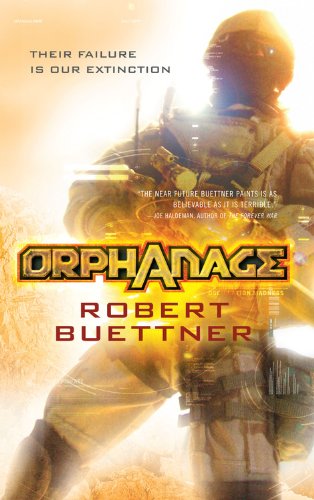
Today, I'm going to quickly highlight Veterans Day with a short list of great science fiction books. These books fall into the great tradition of what is known as the military sci-fi subgenre. Military sci-fi comprises story where military hierarchies, tradition, logistics, and/or tactics factor as heavily into the plot and setting as alien worlds and futuristic technology. What's interesting about these sorts of stories, when compared to traditional space opera, sci-fantasy, or social drama sci-fi, is that it respects the interaction of characters and traditions as somewhat timeless in the scope of how men and women conduct war. The three books I'm highlighting below, however, are not just really good pieces of military sci-fi; they're also all written by veterans, which allows a reader to analyze the book meta-textually. In so doing, these books aren't just great action-packed sci-fi classics, but they're an alternative way of approaching and analyzing some specific veterans.
They're also pretty quick reads, too.
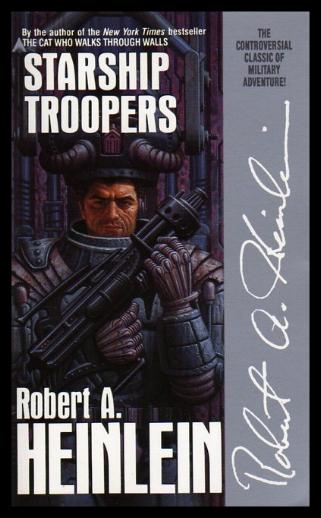
Starship Troopers was written in 1959 and has remained one of the flagships of the subgenre of military sci-fi ever since. It's less of a conventional war story as it is part snapshot of a military oligarchical society and one teen's coming of age within that tradition. I've been a fan of this book since the fourth grade, and I think I've bought it at least a half-dozen times over the years out of a compulsion to always have one at hand. (Not unlike the way Jerry keeps buying copies of The Catcher in the Rye in the movie Conspiracy Theory.) Starship Troopers was written by Robert Heinlein, who graduated from Annapolis Naval Academy in 1929 and retired as a Naval Lieutenant in 1934, and is one of a smattering of not insane pieces of sci-fi written by him. I also recommend Space Cadet, The Moon is a Harsh Mistress, and Red Planet for anyone interested in more of his books, but many of his others are really out there. But this one is a fairly short, fast-moving read that provides a good survey of the major themes of this category of fiction.
The Starfist series of novels is a great collection of 14 novels set in the 2400s. The premier entry in the series, First to Fight, was published in 1997, and presents the marines of the 34th FIST (Fleet Initial Strike Team) performing glorified police work on an inherently unstable world in the middle of yet another brushfire war. If you ignored the publication date, you might think the fiction is reactionary to early War on Terror military stories. The two things I really love about this series of books both relate to the elegance of the series' conceit: it all follows a specific company starting in a specific year. In the early installments, this means that the Confederation of Human Worlds has yet to make contact with intelligent (and hostile) aliens, and the conflicts of the first four books are about dousing political fires on the outskirts of human space. Secondly, the authors consistently draw characters and resources from a genuine military company, meaning that characters that are dropped as names in one book might become main characters you root for in later books, and that the politics of the unit's organization mean more to you as the series goes on. The series was written by David Sherman, who served 6 years in the United States Marine Corps before retiring as a Corporal, and Dan Cragg, who retired as an Army Sergeant Major after 22 years in uniform. They give the series a concentrated level of (US) military culture that sometimes comes off as a bit stereotypical but is always consistent and oozes bravado throughout.
Orphanage is the first of a series of seven (and counting) novels set in a near future interstellar conflict. The first book especially takes a lot of stylistic inspiration from Heinlein's Starship Troopers, though with a lot more action and dialed in characterization of the supporting cast. The first book begins with earth getting bombarded by aliens from the outer reaches of the solar system. As the entire planet reels from the devastating attack, they mount a suicidal expedition to counter-attack the alien presence on Ganymede. The mission is considered so dangerous that the powers-that-be declare that all soldiers selected for the mission must be orphans of the war, earning the book its title and setting a desperate, wounded motif for the series. Robert Buettner, who served as an Army intelligence officer, eventually takes the series into bigger themes, as the war forces humanity to reach out to other stars to battle the aliens throughout the galaxy. There's a lot of great sci-fi that plays intelligent homage to several other authors and series, though the focus and style of the action shifts greatly throughout the books as the nature of the war itself evolves. This is a great feature if you're prepared for it, but if you aren't it can be jarring as politics, logistics, and ethics quickly take the fore.
I hope you take the chance to thank the service people in your life this Veterans Day, and definitely check out these great novels whenever you get the chance. Besides being enjoyable nerd-fodder, they just might encourage you to think differently about these issues next Veterans Day.
Showing posts with label Books. Show all posts
Monday, November 11, 2013
Friday, May 17, 2013
Kickstart Your Weekend: Aliens, Cuddles, and Dino-hunters
Kickstart Your Weekend: A series in which I occasionally
spotlight Kickstarter projects that are ending soon and deserve a little
nerd love. Also, I'll highlight some past projects as well, as you
never know when these enterprises are going to turn up again.
It's another Kickstart Your Weekend! Yes yes. Note that this won't necessarily be a weekly installment on the blog, but there are a number of interesting projects I'll touch on this week and next week. After that, I plan on trying to get a weekly shout-out only to brand new and nerd-interesting projects so you'll have a good amount of time to follow and possibly pledge your support.
So it's been an interesting week for the projects I highlighted last weekend. Bifrost's campaign continues to stagnate as there's a complete lack of feedback and support from Bill Willingham, the project creator and author. Recently he is supposed to have said that Bifrost will happen regardless of the Kickstarter's success, which--while it was probably meant as a reassurance to fans of the project idea--couldn't have done the campaign any favors. The KS campaign is all but certain to fail, and I'm not that broken up about it. If there's one thing I hate as a KS backer it's feeling emasculated by the indifference of a professional creator who doesn't really need the campaign to be successful but wanted to try it anyways. It's like asking your wife to make dinner for when you get home, only to forget and pick up Chicago dogs on the way--only less endearingly eccentric, right? Sure, both funding options might be valid for you, but once you announced one intention the other should be off the table.
Robotech RPG Tactics has been doing solidly well over the past week, and it looks like with 3 days remaining they're going to get awfully close to (pinky to mouth) one million dollars. Guns of Icarus: Adventure Mode has pretty much plateaued, it would seem, and I doubt they will be able to get enough steam to reach two hundred grand, let alone the $500,000 stretch goal they would need to fund all of the MMO elements they have in mind. Still, they've definitely kicked the ball down-field, and I bet the next expansion they fund will put a broadside into their steampunk MMO aspirations. (Is that enough mixed metaphors for you? Because I could bolt another one or two on there.) Jagged Alliance: Flashback has rallied a little bit over the past week, thanks to a mention from the hugely successful Kickstarter for Project Eternity. The merc tactics game still has more than one hundred grand to raise in 3 days, though, so it's still far from a cinch. If you're on the fence about pledging, do it--do it nao.
So that's the followup to last week's stuff, now on to three new project highlights.
Deadzone
What it is: Deadzone is the latest game on Kickstarter from Mantic Games. Set in their science fiction setting known as Warpath, Deadzone is a skirmish-level miniatures wargame with a specific setting and focus that edges it towards being a board game. Players assume a squad-sized team of soldiers and pit them against each other in claustrophobic urban environments, making it somewhat similar in appeal to the anime-style miniature wargame Infinity. Now Mantic Games is a fairly new UK company led by several ex-Games Workshop employees, so I identify them as the anti-GW. It's a distinction I really like, as I've become somewhat zealous in my criticism of GW over the years, and it also means that their miniatures tend to shoot for "like Games Workshop, but better." Whether they're successful or not is a matter of taste, but their miniatures are undeniably less expensive with more realistic proportions (slightly smaller) and tend not to have stupid skulls hanging off every accessory (seriously, I have an old GW model with 30 skulls decorating his clothes and equipment). There are now six factions available as part of the Deadzone campaign: the elite human Enforcers, the disenfranchised human-alien conglomerate Rebels, the necroform-like Plague, the totally-not-Space-Ork faction known as the Marauders, the warrior-Vulcan faction the Asterians, and the space-dwarf Forge Fathers. For a sci-fi wargame that just began in earnest two years ago, Deadzone promises to bring Warpath into triple-a variety and large-scale support for players of lots of different persuasions.
Why it's exciting: First of all, Deadzone is well past its base funding goal, so all funds that they'll be making in the next two weeks of their campaign will go towards stretch goals, unlocks, and free add-ons. Secondly, since this is Mantic's fourth Kickstarter project, they've proven themselves reliable in delivering their supporters great models in a reasonable turn-around. I myself pledged for their sci-fi sports wargame Dreadball, and I gotta say the components are fun and the goodies keep coming--in fact I literally got some of their second-phase models in the mail today. The setting also supports a lot more diversity for play styles and aesthetics than their main competitor, in my opinion. Plus, a recent stretch goal unlocked an alien miniature that bears a striking resemblance to a famous Spectre known for having a lover in every port and a pistol in every tentacle. Pledge for this already!
Bear - A First Time Parent's Continuing Journey
What it is: Alright, so this one isn't so much nerdy as sappy, but the first Bear book was one of the first Kickstarter projects to draw me into the site and really get me excited about some of the unique projects getting funded this way. Created by Ryan Sohmer, Bear - A First Time Parent's Continuing Journey features full-page painted illustrations in a large-format book. Every page has a few proverbs or observations on the surprises and lessons of becoming a parent, and the illustrations themselves depict adorable animal parents and kids in various typical family moments--throwing a hissy on the floor, rocking a baby to sleep, trying to teach your boy to hop a tree branch. You know, the usual.
Why it's exciting: Like Deadzone's Mantic Games, Bear's creator Ryan Sohmer is a proven entity. I pledged for the first volume of Bear, and I have to say that every page just oozes genuine parental affection. Cute paintings, and with narrations that vary from humorously wry to tear-jerking sincere, there's a lot to love in this project. With over two weeks to go and already 75% of the way to their base funding goal, this campaign is certain to be successful. And for those of you who missed out on the first volume, the rewards for this campaign can be used to get a copy of that book as well as the sequel. I recommend the book very highly, it's one of those kids' books that is full of illustrations kids will love and insights parents cherish. That also means it's the kind of book you keep on the top shelf at home or otherwise out of reach so your son doesn't pull it down on the floor and trample it in his enthusiasm.
What it is: This ambitious little PC game is trying to tell a story that is totally different from anything else I know, and it is trying to do so in a completely novel gameplay style, too. Created by Alex Fundora, Stomping Land is a primitive hunting/survival/crafting game. You play a prehistoric bow-armed hunter in a land populated by diverse herds of dinosaurs. Hunting smaller dinosaurs for meat, the second your bow drops a prey animal you're racing against larger predators--like Tyrannosaurs--who will happily come in and enjoy your hard-earned kill. But you can also lay traps, snares, and lures to try to foil these mega-opportunists and get away with your dead, flaccid handiwork cleanly. If only it were so easy to protect one's childhood heroes from being ravaged by opportunistic reboots. Sigh. There's also going to be some sort of tribal coop element to Stomping Land as well, but the details on that haven't been spilled yet.
Why it's exciting: This game looks to incorporate two or three genres with a consistent, visceral gameplay experience. But, despite the ambitiousness of that statement, the tribal dynamics and prehistoric setting mean that the game itself should still be small enough for an indie developer to manage. The idea of stalking small prey dinosaurs, killing them, and then skulking away as scavengers swoop in just sounds like a lot of fun, and certainly not the sort of over-powered player experience the big game makers are interested in producing. And like Deadzone, this one has already met its modest base goal. As a PC game, however, the next two stretch goals are very important--Alex Fundora will hire dedicated full-time talent to help flesh out the world. Considering how nice the pre-alpha looks, it's amazing to think what a full-time developer could do with this unique setting. Let's throw some money at them and find out.
It's another Kickstart Your Weekend! Yes yes. Note that this won't necessarily be a weekly installment on the blog, but there are a number of interesting projects I'll touch on this week and next week. After that, I plan on trying to get a weekly shout-out only to brand new and nerd-interesting projects so you'll have a good amount of time to follow and possibly pledge your support.
So it's been an interesting week for the projects I highlighted last weekend. Bifrost's campaign continues to stagnate as there's a complete lack of feedback and support from Bill Willingham, the project creator and author. Recently he is supposed to have said that Bifrost will happen regardless of the Kickstarter's success, which--while it was probably meant as a reassurance to fans of the project idea--couldn't have done the campaign any favors. The KS campaign is all but certain to fail, and I'm not that broken up about it. If there's one thing I hate as a KS backer it's feeling emasculated by the indifference of a professional creator who doesn't really need the campaign to be successful but wanted to try it anyways. It's like asking your wife to make dinner for when you get home, only to forget and pick up Chicago dogs on the way--only less endearingly eccentric, right? Sure, both funding options might be valid for you, but once you announced one intention the other should be off the table.
Robotech RPG Tactics has been doing solidly well over the past week, and it looks like with 3 days remaining they're going to get awfully close to (pinky to mouth) one million dollars. Guns of Icarus: Adventure Mode has pretty much plateaued, it would seem, and I doubt they will be able to get enough steam to reach two hundred grand, let alone the $500,000 stretch goal they would need to fund all of the MMO elements they have in mind. Still, they've definitely kicked the ball down-field, and I bet the next expansion they fund will put a broadside into their steampunk MMO aspirations. (Is that enough mixed metaphors for you? Because I could bolt another one or two on there.) Jagged Alliance: Flashback has rallied a little bit over the past week, thanks to a mention from the hugely successful Kickstarter for Project Eternity. The merc tactics game still has more than one hundred grand to raise in 3 days, though, so it's still far from a cinch. If you're on the fence about pledging, do it--do it nao.
So that's the followup to last week's stuff, now on to three new project highlights.
Deadzone
![]() |
| Deadzone Enforcers fighting off huge Plague forms. |
![]() |
| This one will not attempt diplomacy... enkindle this! |
Bear - A First Time Parent's Continuing Journey
What it is: Alright, so this one isn't so much nerdy as sappy, but the first Bear book was one of the first Kickstarter projects to draw me into the site and really get me excited about some of the unique projects getting funded this way. Created by Ryan Sohmer, Bear - A First Time Parent's Continuing Journey features full-page painted illustrations in a large-format book. Every page has a few proverbs or observations on the surprises and lessons of becoming a parent, and the illustrations themselves depict adorable animal parents and kids in various typical family moments--throwing a hissy on the floor, rocking a baby to sleep, trying to teach your boy to hop a tree branch. You know, the usual.
Why it's exciting: Like Deadzone's Mantic Games, Bear's creator Ryan Sohmer is a proven entity. I pledged for the first volume of Bear, and I have to say that every page just oozes genuine parental affection. Cute paintings, and with narrations that vary from humorously wry to tear-jerking sincere, there's a lot to love in this project. With over two weeks to go and already 75% of the way to their base funding goal, this campaign is certain to be successful. And for those of you who missed out on the first volume, the rewards for this campaign can be used to get a copy of that book as well as the sequel. I recommend the book very highly, it's one of those kids' books that is full of illustrations kids will love and insights parents cherish. That also means it's the kind of book you keep on the top shelf at home or otherwise out of reach so your son doesn't pull it down on the floor and trample it in his enthusiasm.
![]() |
| Smell that? Are we downwind of those brachiasauruses? |
Why it's exciting: This game looks to incorporate two or three genres with a consistent, visceral gameplay experience. But, despite the ambitiousness of that statement, the tribal dynamics and prehistoric setting mean that the game itself should still be small enough for an indie developer to manage. The idea of stalking small prey dinosaurs, killing them, and then skulking away as scavengers swoop in just sounds like a lot of fun, and certainly not the sort of over-powered player experience the big game makers are interested in producing. And like Deadzone, this one has already met its modest base goal. As a PC game, however, the next two stretch goals are very important--Alex Fundora will hire dedicated full-time talent to help flesh out the world. Considering how nice the pre-alpha looks, it's amazing to think what a full-time developer could do with this unique setting. Let's throw some money at them and find out.
Tuesday, May 7, 2013
Ender's Day
The Next Greatest Day
In the past decade, I've had a lot of lifelong dreams realized in a big way. The Lord of the Rings was realized in a hugely successful film trilogy. I got some seat time in a Tesla Pod. Captain America and the Avengers came to the screen in pure cinematic bliss. There's this little game called Star Citizen coming out that you'll hear (a lot) more about in the future. And while I'm sure there are several other unrealized things left on my nerd bucket list, the only one I can think of now is going to be checked off soon, too. Ender's Game is finally coming to the big screen. And today they are releasing the first trailer for it via a Google+ hangout and then adding it to Youtube.
For those of you haven't heard of Ender's Game, it's a psychological action-drama in a near-future science fiction setting, written by Orson Scott Card. Its title character is Andrew "Ender" Wiggin, who at the age of five is sent to Battle School--an orbital military academy for child prodigies training to become the next crop of commanders to lead humanity in an imminent war with an alien race. The Battle School is full of bright-but-aggressive kids trained to have analytical and violent minds, and so a good portion of the book's drama revolves around how the students increase the stakes to their war games in their efforts to eliminate rivals.
Ender's Game is a great, introspective space epic, even though the actual physical space of the book occurs in claustrophobic, personal corridors and rooms. The descriptions of the Battle School's war games is well thought-out and described in gratifying detail, making a series of training exercises a tense part of the book's action as the school's administrators increase the academic and bureaucratic stakes of the games and the students increase the immediate peril itself. Friendships and concepts of personal identity are paramount in this book, though, as Ender is driven to the brink of severe depression and sociopathy by the trials he has to face, only to be dragged back by the wonderfully defined supporting characters. And Ender's older siblings, Valentine and Peter, develop into king-making politicos in a sort of vengeance against a society that passed them over for assignment to the Battle School. It's dense and yet full of visceral moments that keep the book moving along. And the ending is depressing, raw, and cathartic like a full-body scouring with a pumice stone.
When I was twelve years old and first read Ender's Game, I was immediately affected by it. I moved on immediately to the sequel trilogy, which was much more metaphysical melodrama than psychological military action-drama, but I still devoured the rest of the series. I moved on to a thematically parallel series known as The Seafort Saga, which is one of my favorite book series ever and is terribly difficult to find since the author's passing. But Ender's Game remained fondly fixed in my heart--when Starcraft first came out my Battle.net sign-on was Ender, and later I moved on to Homeworld 2 and became Mazer Rackham, Ender's predecessor from the book. When I first met my future wife, I was singing the book's praises to her in our second or third conversation. Heck, I even helped my junior high science teacher--who had originally recommended the book to me--write a screenplay based on the book.
Which was itself in response to the first rumors of a live action movie adaptation of Ender's Game. Way back in 1999. Since then, the movie has been in production limbo that should be painfully familiar to former Duke Nukem fans, but at one high point Wolfgang Petersen was slated to direct Ender's Game. And then came delays, and I grew tired of farming rumors as Petersen fell out of the project's future. But now we're looking at a vividly realized film, set to come out November 1 of this year, and I'm hearing that same old music. Directed by Gavin Hood (whatthefrak?! Mr. X-Men Origins: Wolverine? Please no), with a James Horner soundtrack (hell yeah!), and the author Orson Scott Card co-writing the screenplay. Oh, there's so much mixed feelings going on in that one sentence, but if Gavin Hood can forgo the dumbing down of characters and conflicts we saw in Origins, then perhaps this movie might not only be a fantastic adaptation of one of my favorite novels, but the best full-fledged sci-fi epic we've had in years.
"...the ending is depressing, raw, and cathartic like a full-body scouring with a pumice stone."
Which was itself in response to the first rumors of a live action movie adaptation of Ender's Game. Way back in 1999. Since then, the movie has been in production limbo that should be painfully familiar to former Duke Nukem fans, but at one high point Wolfgang Petersen was slated to direct Ender's Game. And then came delays, and I grew tired of farming rumors as Petersen fell out of the project's future. But now we're looking at a vividly realized film, set to come out November 1 of this year, and I'm hearing that same old music. Directed by Gavin Hood (whatthefrak?! Mr. X-Men Origins: Wolverine? Please no), with a James Horner soundtrack (hell yeah!), and the author Orson Scott Card co-writing the screenplay. Oh, there's so much mixed feelings going on in that one sentence, but if Gavin Hood can forgo the dumbing down of characters and conflicts we saw in Origins, then perhaps this movie might not only be a fantastic adaptation of one of my favorite novels, but the best full-fledged sci-fi epic we've had in years.
And on the subject of casting: Harrison Ford is going to be playing the Battle School's commandant, Colonel Graff, lending the film full of young unknowns some much-needed star power. And aiding Harrison Ford's character in the role of Colonel Graff's assistant? Han Soto. Damn straight. Not to knock Mr. Soto as an actor, but I guarantee you at some point the casting director just threw his hands up in the air "oh co'mon! It's Han Soto and Han Solo! We gotta hire this guy..." I'm also sure that after a week of constant Solo/Soto jokes on set, the whole thing got old real fast.
Ben Kingsley is playing Mazer Rackham, guaranteeing that between this role and playing the Mandarin in Iron Man 3, he is the nerd-daddy of 2013. The young stars making up the principal characters look promising, though casting actors so young and then throwing an entire plot behind their believability as military savants is a novel problem that Ender's Game faces. Whatever the case, Ender's Game promises to be big enough to get a whole new generation of readers picking up a great piece of genuinely thought-provoking science-fiction.
In the end, though, there are some things I absolutely require from this movie. And some of them involve minor spoilers to the book. If you're sensitive to spoilers I suggest you stop here, but at the same time Ender's Game is still a fantastic read and re-read even when you know all of the major plot-points. But I'm warning you anyways.
"oh co'mon! It's Han Soto and Han Solo! We gotta hire this guy..."
Still here? Good.
1. The Third Formic Invasion must be a lie. This is a big one, and it's one that the writers could easily be tempted to change. For most of the book, the characters all believe that the Formics--advanced insectoid aliens who nearly wiped out humanity twice--are on their way to Earth for round three of the Bugger Wars. In fact, it turns out that they've been preparing for Earth's counterattack. Ships in Ender's Game are slower than the speed of light, and so trips to nearby stars are a matter of years. So while the government has been proclaiming that the Third Formic Invasion is on its way to them, they're actually trying to prepare their potential commanders for the day they will have to remotely lead far-flung fleets in assault over alien worlds. This deception is key to the central trauma of Ender's life, and if they opt to glitz up the storyline by making the Third Invasion legit, the entire theme gets muddled and lost.
2. The kids must be kids. This is a tender requirement, because Ender's Game features kids from the ages of 5 to 12 committing some pretty brutal acts, and that generally only gets represented in shock dramas and horror movies, and Ender's Game will not be either of those. The cast is a little older than their book counterparts--in the book, they ranged from 6 to 14 years old throughout in the lionshare of the plot, and the movie's youngest principal is 14 years of age--but this goes back to storytelling more than casting anyways. The actors need to walk the razor's edge of portraying children who are fragile and prone to youthful excesses and assumptions, but still capable of acutely violent and tactical action.
3. Peter needs to be twisted. Peter Wiggin, Ender's older brother and a frightening childhood sadist, needs to be fully realized in his disturbed state to sell Ender early on as a frightened boy. Ender's Game and its parallel novel Ender's Shadow both revolve around making its protagonists spiritually stripped and abused in order to help shine a light on their own survival-based dependence on violence. For Ender, that motivating force is Peter, and he needs to be sick to be effective. Now, the flip side is that Peter grows up into a mature man who seems to have overcome his demons even as he assumes greater and greater political power. Because Peter, as twisted as he starts, is never supposed to stray outside the extremes of a child who can't get the love he needs.
So those are my first thoughts on Ender's Game. Be sure to watch the trailer, airing on Google+ and Youtube shortly.
UPDATE 5/7/2013, 3:53PM CST:
And now here you go. The trailer in all its teasing spectacle.
So those are my first thoughts on Ender's Game. Be sure to watch the trailer, airing on Google+ and Youtube shortly.
UPDATE 5/7/2013, 3:53PM CST:
And now here you go. The trailer in all its teasing spectacle.
Monday, June 20, 2011
Father's Day at the Nerdery
Today was Father's Day here in the United States. Early in the twentieth century, Americans began celebrating Father's Day informally around the same time that Mother's Day gained support. But, while Mother's Day became an official national holiday in 1914, the holiday honoring fathers wasn't officially recognized until 1972. It's also the annual peak of collect calls every year, even though it is eclipsed by Mother's Day in terms of overall phone calls, gift giving, and trips to visit loved ones.
This is unacceptable.
My mother nurtured me and loved me, but it was my father who taught me the hard lessons. And I love the hard lessons. Things like how to stand tall when you're getting beaten down, when to fight back and when to back off, and--hardest lesson of them all--how to treat the opposite sex. I don't think I'm alone in owing this much to my father, either--I think most of you could say similar things. This isn't meant to be self-congratulatory, though. Today may be my first Father's Day as a parent, but I feel not even a fraction of the esteem for myself that beams from me to my dad. Mother's Day, to me, has always felt much more like a day to thank mothers for acute instances of love and nurturing--birth being foremost. But Father's Day seems to be more about giving a return to fathers for the investment of spirit they've given us all over the years. So no, today isn't a day to honor me, even if I happen to be a dad. I haven't earned it yet.
But I plan on earning it, and I enjoy getting some inspiration from the media around me.
I don't think most popular media holds to my views of Father's Day or the special impact of a good father in a child's life--especially a son's life. It doesn't seem like good fathers are easily found in the stories we share in our entertainment-soaked lives. They're tough to find, and tough to recognize once they are found.
That is something we shall have to remedy.
There are a few pieces of quality media that speak to the special influence a father can have in the life of his child. Being a male myself, I also gravitate towards the ones that show the bond of a father and son. So here are a few great inspirational stories of a father's impact on their son:
(Light spoilers throughout)
This is unacceptable.
My mother nurtured me and loved me, but it was my father who taught me the hard lessons. And I love the hard lessons. Things like how to stand tall when you're getting beaten down, when to fight back and when to back off, and--hardest lesson of them all--how to treat the opposite sex. I don't think I'm alone in owing this much to my father, either--I think most of you could say similar things. This isn't meant to be self-congratulatory, though. Today may be my first Father's Day as a parent, but I feel not even a fraction of the esteem for myself that beams from me to my dad. Mother's Day, to me, has always felt much more like a day to thank mothers for acute instances of love and nurturing--birth being foremost. But Father's Day seems to be more about giving a return to fathers for the investment of spirit they've given us all over the years. So no, today isn't a day to honor me, even if I happen to be a dad. I haven't earned it yet.
But I plan on earning it, and I enjoy getting some inspiration from the media around me.
I don't think most popular media holds to my views of Father's Day or the special impact of a good father in a child's life--especially a son's life. It doesn't seem like good fathers are easily found in the stories we share in our entertainment-soaked lives. They're tough to find, and tough to recognize once they are found.
That is something we shall have to remedy.
There are a few pieces of quality media that speak to the special influence a father can have in the life of his child. Being a male myself, I also gravitate towards the ones that show the bond of a father and son. So here are a few great inspirational stories of a father's impact on their son:
(Light spoilers throughout)
3:10 to Yuma (Own it)
The 2007 James Mangold version of 3:10 to Yuma is a picturesque film--perfectly shot, casted, and paced. Starring Christian Bale and Russel Crowe, it's a western that achieves a timeless classic feel that overshoots the fanciful westerns of the 1950s through 1990s and instead goes back to the grim veracity of the 1870s. And Alan Tudyk's in it, too. But the core of 3:10 to Yuma, the heart and soul that drives the railroad western to its tragic end, is a father-son relationship of heart-rending poignancy. Bale's character, Dan Evans, begins the film a ruin of a father figure. He's been rendered impotent in his home through circumstance and stubborn ethics, and the audience is pretty clearly told that he is not genuinely respected by his wife or his eldest son, William. When Dan takes on the job of escorting the notorious outlaw Ben Wade, everyone assumes it's either to escape his abject poverty or to assuage his strict ethics. But it's in the middle of the film's tear-spilling climax that he levels with the outlaw as to what drives him: a desire to fill his son with pride and respect. When you watch this film, pay close attention to the pained dynamic between Dan and William, and you'll see a father--who is all too aware of his own short-comings--trying to be a true hero to his son at an age where the cheap and the frivolous is all too appealing to the youth.
Run, Fatboy, Run (Need to own it--need to own it real bad)
You might not realize it, but David Schwimmer's comedy about a slacker baby-daddy in London trying to run the Thames marathon has a lot in common with 3:10 to Yuma. Starring the pitch-perfect Simon Pegg as the improbably lovable dissolute Dennis, Run, Fatboy, Run begins with a moment of acute failure on the lead's part: it depicts Dennis running out on his pregnant fiance on their wedding day. The movie's bulk takes place five years later, when Dennis lives in a tenuous equilibrium balancing his uninspired life as a feckless bachelor with his shining relationship with his adorable son. He also clearly still has feelings beyond guilt for his ex, as well, so when she gets engaged to a motivated, marathon-running self-starter, the petty and impetuous Dennis jumps into a pair of running shorts, too. This isn't a romance, though, as Dennis clearly admits that he has no hope to aspire beyond merely earning some respect from his love and his son. So, like the western above, this comedy is about a father tackling insurmountable odds in the name of being better for those who look to him for strength. The humor is a mix of American gross-out gags and British understatement, and the climax is an emotional string of endearing moments that are all too rare in comedies.
Battlestar Galactica (Own seasons one through three so far)
One of the core dynamics throughout the 2004 Battlestar Galactica series is the strained relationship between William Adama and his son Lee. Early on in the pilot mini-series, we see that Lee deeply resents the pressure and oppressive military legacy he felt overshadowed his and his dead brother's lives. They come to an uneasy truce, but the relationship becomes gold-platedly touching in the season one episode "Hand of God". Amidst the sterling sci-fi treat of the episode, the son--like many of us--flounders with doubt about his own abilities to accomplish the mission of the highest importance, and he tells his father as much in the flimsy hope of being let off the hook. Instead, father William Adama tells Lee that, as his son, he wouldn't have anyone else go out on the mission--because he's always had faith in his son to do the right thing. It's one of the first and best of the series' quiet, tender moments between the two, and when Lee returns home victorious, the look the two exchange adds to the military triumph with an emotional mastery that inspires you that any rocky relationship with a parent can be forged into something delicate and respectable.
Red Dead Redemption (Own it) SPOILERS WILL FLOW
Produced by Rockstar Games, I never expected Red Dead Redemption to be beautiful. But, between sweeping visuals, open pacing, and a plot that takes cues from Unforgiven, 3:10 to Yuma, and The Outlaw Josey Whales, it is just that: beautiful. Over the course of a long and violent quest for alleged government men, protagonist and former-outlaw John Marston kills off the rest of his former gang and returns home to his wife and teenage son, Jack. What makes the game achieve a level of narrative brilliance I never expected from the Grand Theft Auto creators, though, is that the last act of the game concerns itself with minor missions that give you some time to enjoy with your wife and son. During the understated missions, John is confronted with Jack's resentment over the additional hardships he's endured because of his father's mistakes. John also confides in his wife that they have a responsibility to put away their wild, free-willed ways in order to make a better life accessible for their son. After these moments and a few more like them, John gives up his life in order to give his wife and son a chance to escape. The tragic death is given the grand treatment that you'd expect from any of the above movies, and is afterward followed by one last mission as Jack Marston rides to avenge his father seven years later. Not only does the game illustrate the touching, pathetic power of a father's nobility and personal sacrifice, but it also outlines the flow of a father's sins upon his son's head.
Patriarch's Hope (Own it)
As the sixth book in the Seafort Saga, Patriarch's Hope presents the reader with a rich tapestry of characters as the children of the series become protagonists alongside the first generation. Not only does this make for a unique and gripping read, but it becomes a wonderful dissection of the trials of parenting and the power of guilt. The series' main character, Nicholas Seafort, spends the entire series haunted by the severe presence of his single father's regimented upbringing. Now, Nick Seafort is also being hounded by his own son's contrary idealism. The drama gets a little thick, as much of it revolves around futurist politics, but it is nonetheless a wonderfully affecting story about the bonds of fathers and sons, and the conflict they have in trying to define themselves independently from each other--which, in the end, is impossible.
Don't just go out and read, play or watch these tributes to fathers. Live them, honoring your father by being the man or woman he taught you to be--the one he wants you to be. And I hope you gave him a phone call, too. But not a collect call.
Tuesday, May 31, 2011
(Belated) Memorial Day at the Nerdery
This is a bit late, obviously. The beloved spawn is to thank, as he decided to throw a ship-fit like none other to inaugurate his first Memorial Day. To get the authentic feel for the creative cauldron that crafted this article, put the nearest piglet in a hot bath and occasionally stick a table fan up to your ear. That will approach the level of painful distraction the drooling dear fostered for my day off.
It's Memorial Day today, a United States holiday dating back to 1865, when freedmen decorated the graves of Union soldiers. Throughout the rest of the 19th century and into the 20th, Decoration Day was a time to specifically honor the sacrifices of Union soldiers who fought and died in the Civil War. After World War I, it became a time for Americans to commemorate all their fallen soldiers, and the term Memorial Day became more and more prevalent. In the 1960s, Congressional bills formalized the holiday's title as Memorial Day, and established it as the last Monday of every May.
So now you're here on a three day weekend, reading a blog. Maybe you watched a parade today, listened to a ceremony, and are having a barbecue. The kids are running around, playing in some of the first hot, sunny weather the midwest has seen this year. Dogs are getting disproportionate amounts of exercise today, and the chittering robins are back on your porch, flitting around from branch to deck to feeder in their ever-bobbing daily routine. Routine. It's a summer holiday--the summer holiday, really--ushering in warm weather and that comfortable summertime pace of life when you saunter from one air-conditioned environment to another before dipping into a pool or breathing in some affirming grill smoke.
And where are the decorations on the graves of soldiers? What are you remembering today? Did you wake up and think of the sacrifices of others today, or did you rush to get that chicken marinade started?
I'm a firm believer in the power of entertainment. What we enjoy in our leisure time, and why, informs the choices we make, the mental habits we feed, and the lives we lead. Being a nerd isn't just a vapid way to spend disposable income and fill free time. It's about exciting the mind and the heart in a youthful, exuberant way that ultimately uplifts and edifies. So today I have a selection of nerd-approved media--games, books, and movies--to help jog your Memorial Day into something more than the first barbecue of the summer.
Some of these pieces of entertainment will doubtless seem trivial, almost crassly so, compared to the others. They are not selected on equal footing, either by appropriateness to my purpose or by overall merit. Instead, they are selected as a cross-section of media that can all be used to help stir your thoughts towards the true purpose of today. Every nerd should be intimately familiar with at least a couple of these, but everyone--nerd or not--should be able to read and appreciate the import of at least one item on this list. They aren't necessarily cerebrally concerned with sacrifice or Memorial Day itself, but they all lend themselves quite well to introspection on this day of remembrance.
Memoir 44 (board game)
Few board games are both so accessible and so historically concerned as Memoir 44. A board game by Days of Wonder, the makers of the family classic Ticket To Ride, Memoir 44 is a wargame that recreates the seminal battles of World War II. Each scenario for the game starts with a paragraph or two of description of the historical setting, which frames each game in concrete terms that helps to bring the key moments of the war to life. The rules are extremely intuitive and straight-forward, allowing kids as young as 8 to play, and games rarely last more than an hour and are frequently much shorter. These two factors mean that Memoir 44 can not only be a keystone family night game, but it can easily serve as a valuable illustration to children when they are first learning about World War II. And for the rest of us, it's a vibrant reminder of the moments that laid the groundwork for our modern era, which we forget all too often.
Captain America (comic book series)
The origin story of Captain America, both as a character and as a comic, is a story of enduring patriotism. Created by Joe Simon and Jack Kirby a full year before the United States of America entered the war, their comic was met with a mixed response at first. Depicting a staunchly political, war-oriented plot, the comic predicted America getting pulled into the war a year before Pearl Harbor, and anti-war groups sent the pair hate mail and threats for it. Time and events proved them right, though, and Captain America became one of the most popular superheroes of all time. But beyond being another story of a guy in tights, Captain America is--and always has been--about personal endurance in doing what is right, a symbol of the generation that created him and the soldiers he leads in the comics' plots.
Halo (video game series)
The Halo video game series is about the personal sacrifices of soldiers. It gets overlooked in the vanity of the FPS(first-person shooter) genre and the spectacle of the science-fiction settings, but its story is a tribute to the sacrifices of soldiers throughout history. The main character is a class of soldier that invokes the Spartans of Thermopylae, the Fall of Reach parallels the Battle of the Alamo, and the celebrity of the main character evokes a general patriotism in humanity that smacks of Captain America himself. The games Halo 3, Halo: ODST, and Halo: Reach in particular all feature narratives that give sensitive honor to these themes, and the novels (especially those by Eric Nylund) elaborate on them by emphasizing the personal grotesqueries the Spartans have endured and the casual apathy they receive from the people they regularly protect.
Red Dawn (movie, soon to be remade. Spoiler alert)
This soon-to-be-remade classic from 1984 is literally a memorial movie. Virtually all the movie's protagonists die over the course of the movie, not all nobly, but the determination and gung-ho violence of the movie is just sensitive enough to make the film's ending shot of the monument to the resistance resonate on a real, gripping level. Considering it is an 80s commie-killing action movie, I am actually surprised that John Milius exhibited the restraint he did in making such a dramatically even-handed film, relatively speaking.
The Things They Carried (book)
Tim O'Brien's book The Things They Carried is a life-changing, heart-rending book. A series of short stories about 'fictional real events', the book is a series of endearing, disgusting contradictions that help to illustrate but not explain the trials and depth of personal loss those who served during Vietnam endured. It's a tough book to get through, like so many truly great stories, but the emotional fatigue I felt when I put the book down is priceless. There's a vague sense of enlightenment that comes from reading this book that always puts me in mind that this is what Memorial Day should always and ever entail.
These aren't substitutes--or even progenitors--of patriotism, pride, or anything like it. These are examples of how the things we nerds love and revel in have the capstones for introspection of all we owe to those who died for our security and freedoms--in times past and time yet to come.
It's Memorial Day today, a United States holiday dating back to 1865, when freedmen decorated the graves of Union soldiers. Throughout the rest of the 19th century and into the 20th, Decoration Day was a time to specifically honor the sacrifices of Union soldiers who fought and died in the Civil War. After World War I, it became a time for Americans to commemorate all their fallen soldiers, and the term Memorial Day became more and more prevalent. In the 1960s, Congressional bills formalized the holiday's title as Memorial Day, and established it as the last Monday of every May.
So now you're here on a three day weekend, reading a blog. Maybe you watched a parade today, listened to a ceremony, and are having a barbecue. The kids are running around, playing in some of the first hot, sunny weather the midwest has seen this year. Dogs are getting disproportionate amounts of exercise today, and the chittering robins are back on your porch, flitting around from branch to deck to feeder in their ever-bobbing daily routine. Routine. It's a summer holiday--the summer holiday, really--ushering in warm weather and that comfortable summertime pace of life when you saunter from one air-conditioned environment to another before dipping into a pool or breathing in some affirming grill smoke.
And where are the decorations on the graves of soldiers? What are you remembering today? Did you wake up and think of the sacrifices of others today, or did you rush to get that chicken marinade started?
I'm a firm believer in the power of entertainment. What we enjoy in our leisure time, and why, informs the choices we make, the mental habits we feed, and the lives we lead. Being a nerd isn't just a vapid way to spend disposable income and fill free time. It's about exciting the mind and the heart in a youthful, exuberant way that ultimately uplifts and edifies. So today I have a selection of nerd-approved media--games, books, and movies--to help jog your Memorial Day into something more than the first barbecue of the summer.
Some of these pieces of entertainment will doubtless seem trivial, almost crassly so, compared to the others. They are not selected on equal footing, either by appropriateness to my purpose or by overall merit. Instead, they are selected as a cross-section of media that can all be used to help stir your thoughts towards the true purpose of today. Every nerd should be intimately familiar with at least a couple of these, but everyone--nerd or not--should be able to read and appreciate the import of at least one item on this list. They aren't necessarily cerebrally concerned with sacrifice or Memorial Day itself, but they all lend themselves quite well to introspection on this day of remembrance.
Ken Burns: The Civil War (documentary mini-series)
Since 1990, Kens Burns' nine part series on the Civil War has dominated the subject, and for good reason. Presented with a deliberate pace, evocative sound and visuals, it takes viewers through the five years of the war with a careful attention to the personalities of both the famous figures who defined history and the average men and women who made history. In its constant wealth of quotes, journal entries, and memoirs from Americans throughout the war, few documentaries do such a great job of making history and the sacrifices of our forebears real.
Memoir 44 (board game)
Few board games are both so accessible and so historically concerned as Memoir 44. A board game by Days of Wonder, the makers of the family classic Ticket To Ride, Memoir 44 is a wargame that recreates the seminal battles of World War II. Each scenario for the game starts with a paragraph or two of description of the historical setting, which frames each game in concrete terms that helps to bring the key moments of the war to life. The rules are extremely intuitive and straight-forward, allowing kids as young as 8 to play, and games rarely last more than an hour and are frequently much shorter. These two factors mean that Memoir 44 can not only be a keystone family night game, but it can easily serve as a valuable illustration to children when they are first learning about World War II. And for the rest of us, it's a vibrant reminder of the moments that laid the groundwork for our modern era, which we forget all too often.
Captain America (comic book series)
The origin story of Captain America, both as a character and as a comic, is a story of enduring patriotism. Created by Joe Simon and Jack Kirby a full year before the United States of America entered the war, their comic was met with a mixed response at first. Depicting a staunchly political, war-oriented plot, the comic predicted America getting pulled into the war a year before Pearl Harbor, and anti-war groups sent the pair hate mail and threats for it. Time and events proved them right, though, and Captain America became one of the most popular superheroes of all time. But beyond being another story of a guy in tights, Captain America is--and always has been--about personal endurance in doing what is right, a symbol of the generation that created him and the soldiers he leads in the comics' plots.
Halo (video game series)
The Halo video game series is about the personal sacrifices of soldiers. It gets overlooked in the vanity of the FPS(first-person shooter) genre and the spectacle of the science-fiction settings, but its story is a tribute to the sacrifices of soldiers throughout history. The main character is a class of soldier that invokes the Spartans of Thermopylae, the Fall of Reach parallels the Battle of the Alamo, and the celebrity of the main character evokes a general patriotism in humanity that smacks of Captain America himself. The games Halo 3, Halo: ODST, and Halo: Reach in particular all feature narratives that give sensitive honor to these themes, and the novels (especially those by Eric Nylund) elaborate on them by emphasizing the personal grotesqueries the Spartans have endured and the casual apathy they receive from the people they regularly protect.
Red Dawn (movie, soon to be remade. Spoiler alert)
This soon-to-be-remade classic from 1984 is literally a memorial movie. Virtually all the movie's protagonists die over the course of the movie, not all nobly, but the determination and gung-ho violence of the movie is just sensitive enough to make the film's ending shot of the monument to the resistance resonate on a real, gripping level. Considering it is an 80s commie-killing action movie, I am actually surprised that John Milius exhibited the restraint he did in making such a dramatically even-handed film, relatively speaking.
The Things They Carried (book)
Tim O'Brien's book The Things They Carried is a life-changing, heart-rending book. A series of short stories about 'fictional real events', the book is a series of endearing, disgusting contradictions that help to illustrate but not explain the trials and depth of personal loss those who served during Vietnam endured. It's a tough book to get through, like so many truly great stories, but the emotional fatigue I felt when I put the book down is priceless. There's a vague sense of enlightenment that comes from reading this book that always puts me in mind that this is what Memorial Day should always and ever entail.
These aren't substitutes--or even progenitors--of patriotism, pride, or anything like it. These are examples of how the things we nerds love and revel in have the capstones for introspection of all we owe to those who died for our security and freedoms--in times past and time yet to come.
Subscribe to:
Posts (Atom)